Hands-On Experience: The Start of Georgia Tech's Co-op Program
By: Jack Purdy, BA 22 | Categories: Tech History
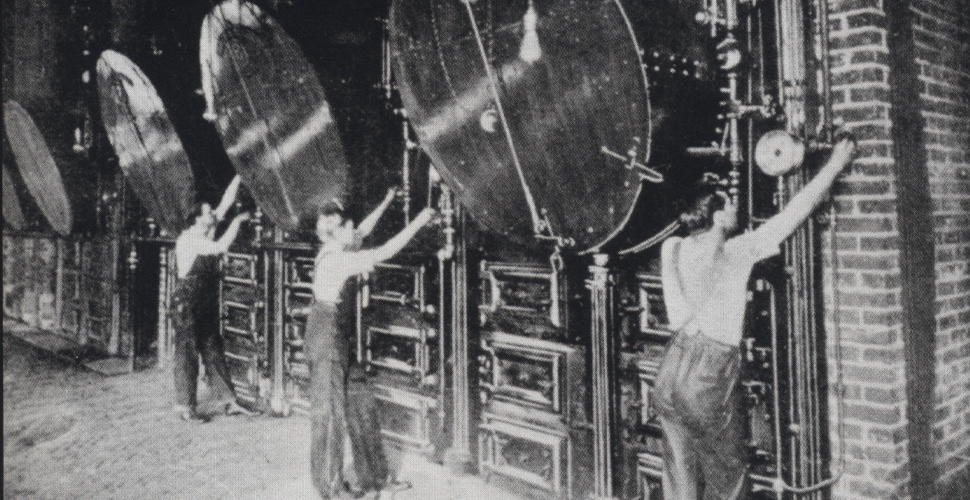 Georgia Tech co-op students in 1912 testing boilers at the Atlanta Water Works station on Hemphill Avenue.
In 1912, 24 years after the Georgia School of Technology opened its doors, the Cooperative Education (Co-op) Program began at Tech. President Kenneth G. Matheson was facing an academic attrition problem with students. Seeking ideas, he visited the University of Cincinnati to see a new kind of program, then known as the “Cincinnati Plan.”
The concept came from Herman Schneider in 1902, who had noticed his engineering students at Lehigh University were struggling to grasp the material. Additionally, the graduating students who worked at the nearby steel mill often were put on probationary periods because they didn’t have enough hands-on experience to immediately step into their roles.
Schneider came up with a plan to have students alternate their time between taking classes and working real engineering jobs. While it slowed down progress in the classroom, the time away made up for itself in preparing graduates for the workforce.
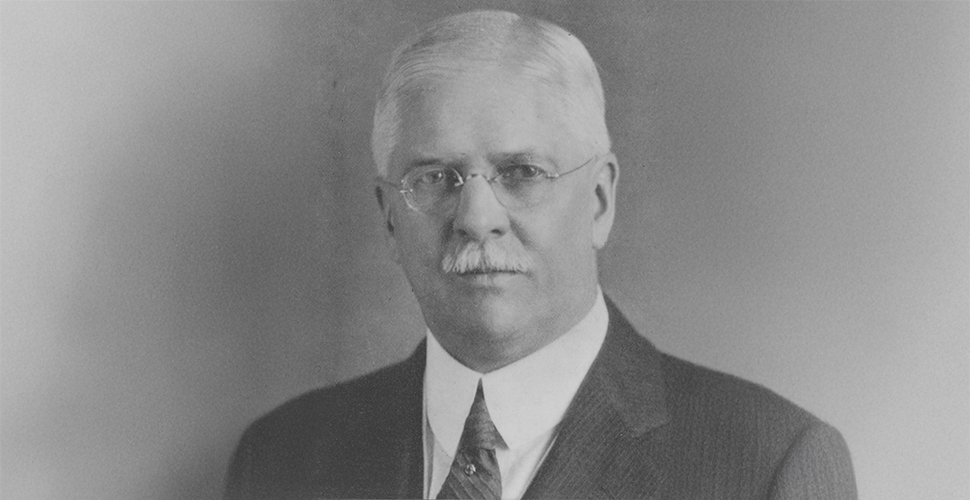 Matheson served as president of Georgia Tech from 1902 to 1922. He brought the idea of cooperative education to Tech, which began its co-op program in 1912.
Thoroughly impressed, Matheson returned to Tech and initiated a committee led by Professor Thomas Branch to study the feasibility of a co-op program at Tech. At a June 1909 Tech Board of Trustees meeting, the results of Branch’s findings were presented, showing that “it puts students in position to enter upon their work immediately on leaving college, and with a certainty of employment.”
That same year, Matheson discreetly ran his own trial with a single student, George Semmes, ME 1910, who worked at the Gibbs Gas Engine Company during the 1909–’10 school year.
The program was approved for a trial in fall 1912 and Branch became dean of the program.
The Georgia Railway & Power Company was one of the first employers. Tech students worked for the company in gas power generation and streetcar maintenance in Atlanta. Rail companies were a popular option for students since as employees they could ride the trains for free and they received insurance.
A Co-op Dorm
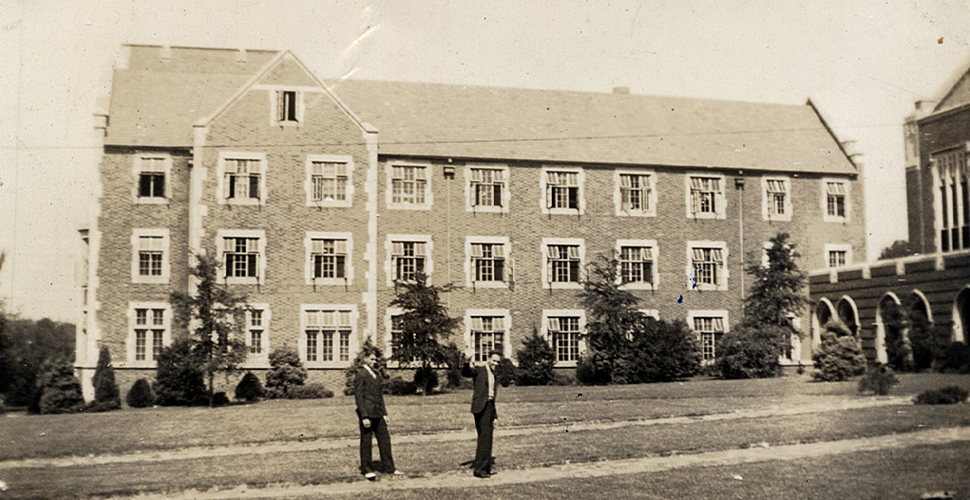 Co-op students lived in Cloudman Dormitory, pictured here in 1939.
In 1932, Cloudman Dormitory was built and it became the residence hall for co-op students. The co-op director’s office was also located in the dorm so that staff and students were all under the same roof.
In 1939, Harrison Dorm was built and housed upperclassmen co-op students. Starting in the 1950s, Techwood Dorm was also used to house co-op students.
Largest Voluntary Co-op Program In The Country
As defense funding increased at Tech prior to the United States’ entry into World War II, the demand for Tech students increased as well. In 1941, a record 771 students were enrolled in the program. By the co-op program’s 75th anniversary celebration in 1987, it had become the largest voluntary co-op program in the country (it remains No. 1 today) and sixth largest overall.
A major change to the program came in 1998, when the Georgia Board of Regents voted to shift all University System of Georgia schools to the semester calendar. Previously, Georgia Tech had been on a quarter calendar. Starting in fall 1999, the co-op program transitioned to the semester program. The transition went smoothly with only a 4% dropoff in enrollment a full year into the semester system.
As more work-based learning opportunities, such as internships, emerged at Tech and following the Covid-19 pandemic, co-op enrollment has decreased.
Nevertheless, it was and still remains a key way for Tech students to make industry connections, gain real-world experience, and pay for college—all while completing their degrees.
“The co-op program provided me with a foot in the door of a very major corporation. Had I graduated without that co-op experience, I don’t know what I would’ve done or where I would’ve ended up,” said John Goodwyne, Jr., IE 62, for the book A Century of Progress: The History of Cooperative Education at Georgia Tech. Goodwyne worked eight quarters at the Ford Motor Company.
Co-op Club and Briaerean Honor Society
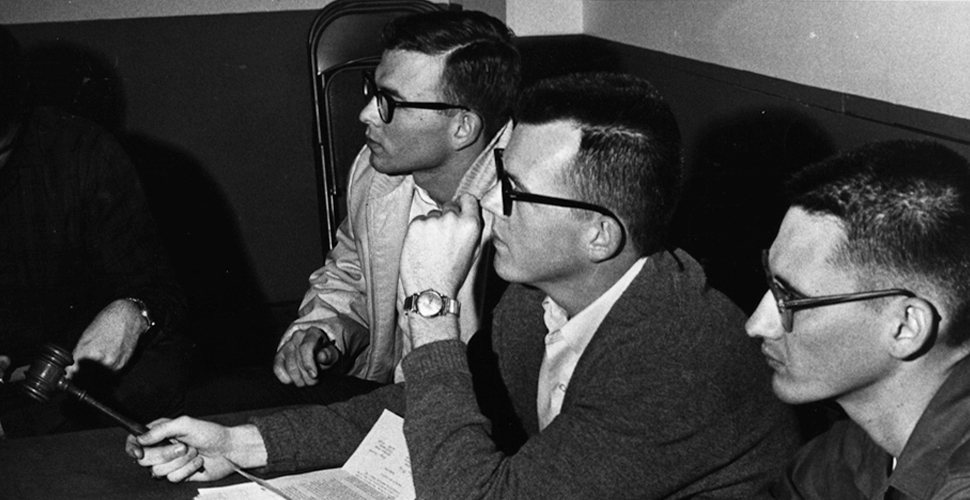 Co-op Club members meeting in 1940.
Two social organizations that still exist today were born out of the Co-op Program: the Co-op Club and the Briaerean Honor Society. The Co-op Club began in 1915, organized by the original class of co-op students. Like other fraternities and clubs on campus, they sponsored events and participated in intramural sports. The club hosted one of the main balls, the Mechanics Ball.
The Briarean Honor Society is the honor society for the Co-op Program, which includes upperclassmen with GPAs above 3.0. In the past, the society ran its own events, including a welcome event called, "Smoker," where campus leaders spoke to students and cigarettes were provided for the listening audience.