Georgia Tech Throwbacks: See Vintage Georgia Tech T-Shirts
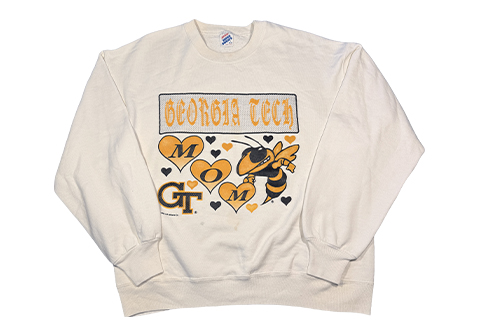
Gen Z and Millennials are leading a secondhand clothing boom, according to eBay's 2025 Recommerce Report. Check out the Georgia Tech vintage shirts that Yellow Jackets have recently scored.
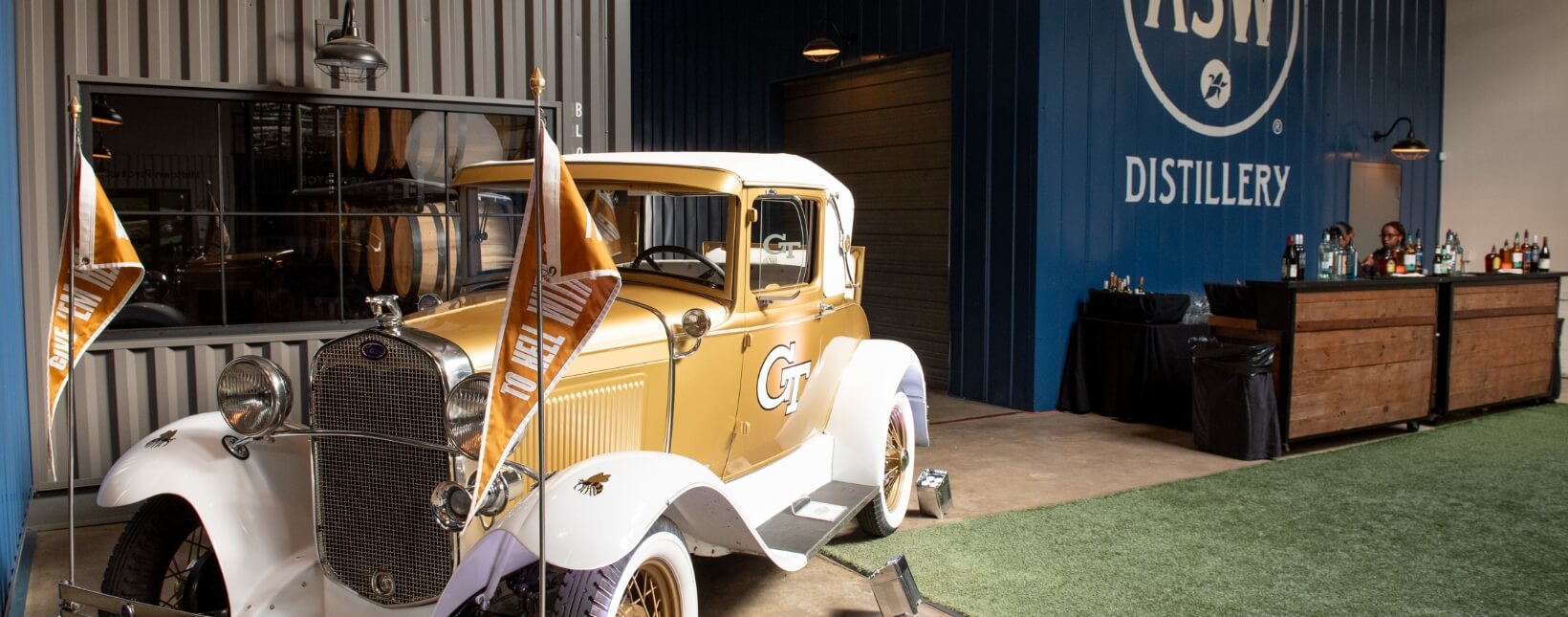
Gen Z and Millennials are leading a secondhand clothing boom, according to eBay's 2025 Recommerce Report. Check out the Georgia Tech vintage shirts that Yellow Jackets have recently scored.
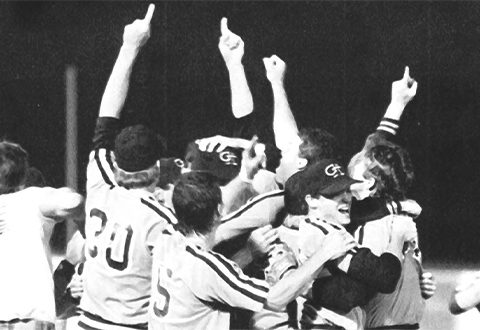
In 1985, the Georgia Tech Baseball team won the ACC title. The streak would continue for three more years, setting an ACC record that still stands today.

Bobby Jones, ME 1922, golf’s only calendar Grand Slam champion, was part of Tech’s first golf team, winning 13 majors in his career. He served as the Georgia Tech Alumni Association president from 1931 to 1933, established The Masters tournament, and is inducted in both the World Golf and Georgia Tech Athletic Halls of Fame.
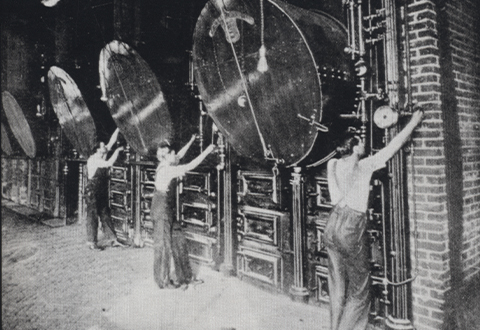
The Origins of Georgia Tech's Co-op Program
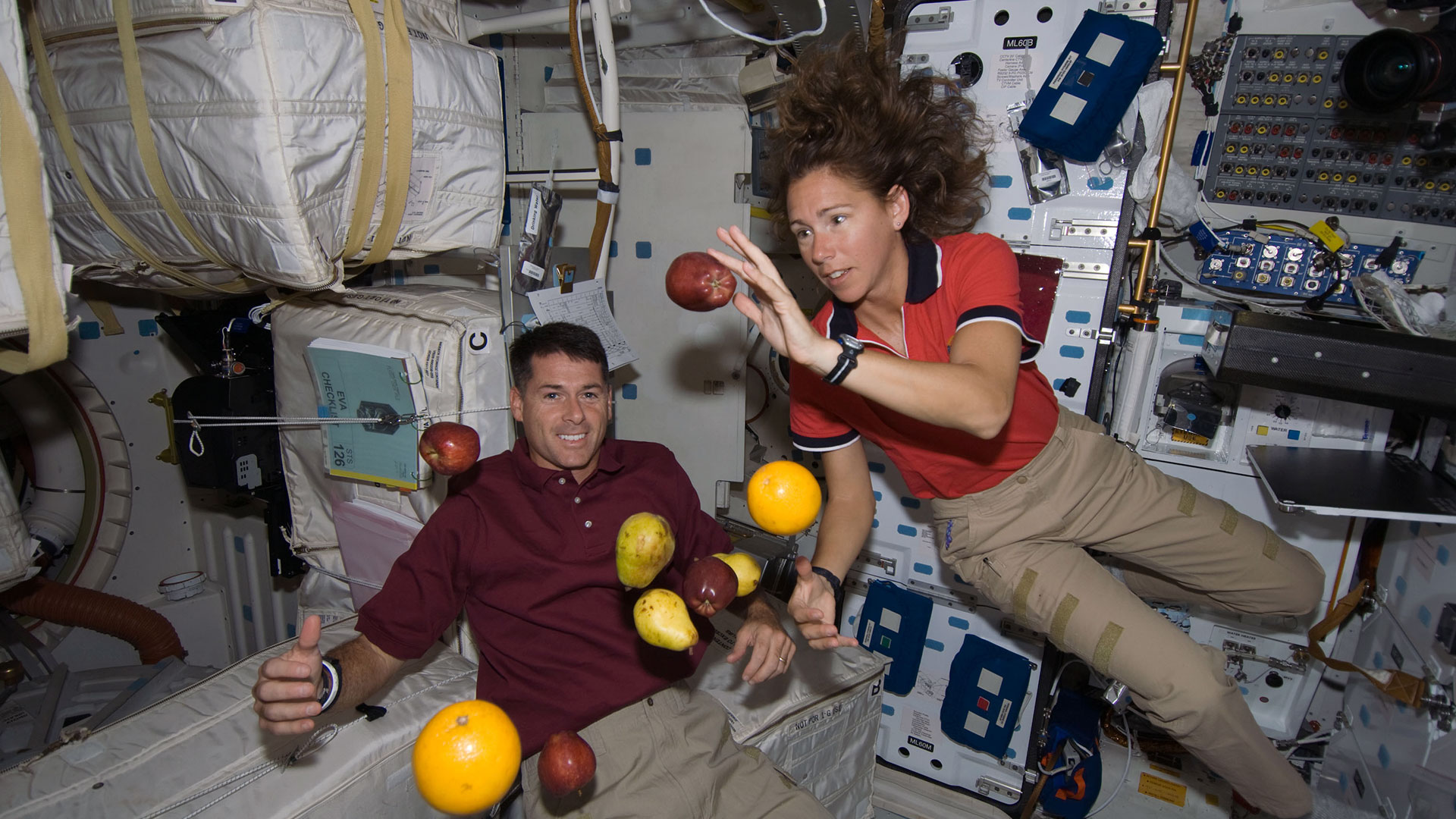
Yellow Jacket astronauts have explored the final frontier for more than 60 years and traveled more than 500 million miles.

Starting in 1965 with John Young, AE 52, HON PhD 03, there has been a Yellow Jacket in space every decade since the beginning of human spaceflight.

The Yellow Jacket, a control-line plane, was a halftime sensation during Georgia Tech Football games in the 1940s through the 1960s.
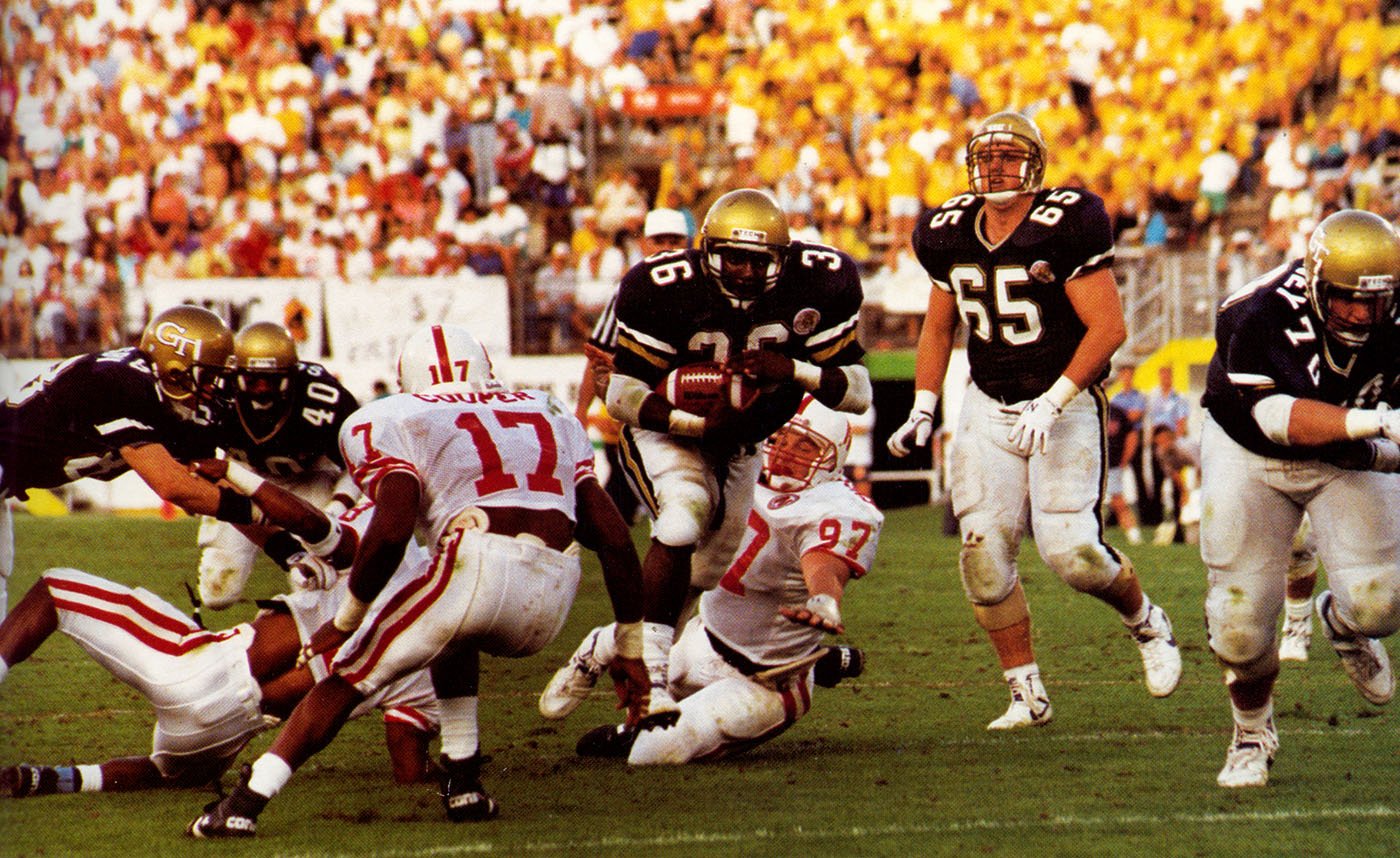
The wins that have defined Tech Football history

Tech is not just an institute of higher education. Rather, it’s a cultural landmark that’s served as a launchpad for more celebrated careers and relationships. Here are just a few of the many anecdotes, which continue to resonate across the Institute’s walls today.

Renovations to the D.M. Smith Building uncovered 100-year-old signatures of Tech students. Who were they?
Sometimes, a house is more than just a roof overhead. Here are stories of places Yellow Jackets have called home for four—or more—years
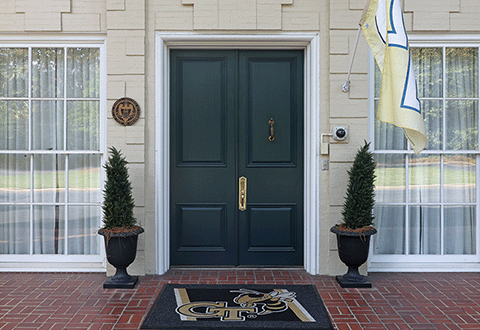
While the President’s House on 10th Street is no longer lived in by Tech presidents and their families, its story and memories have not faded.
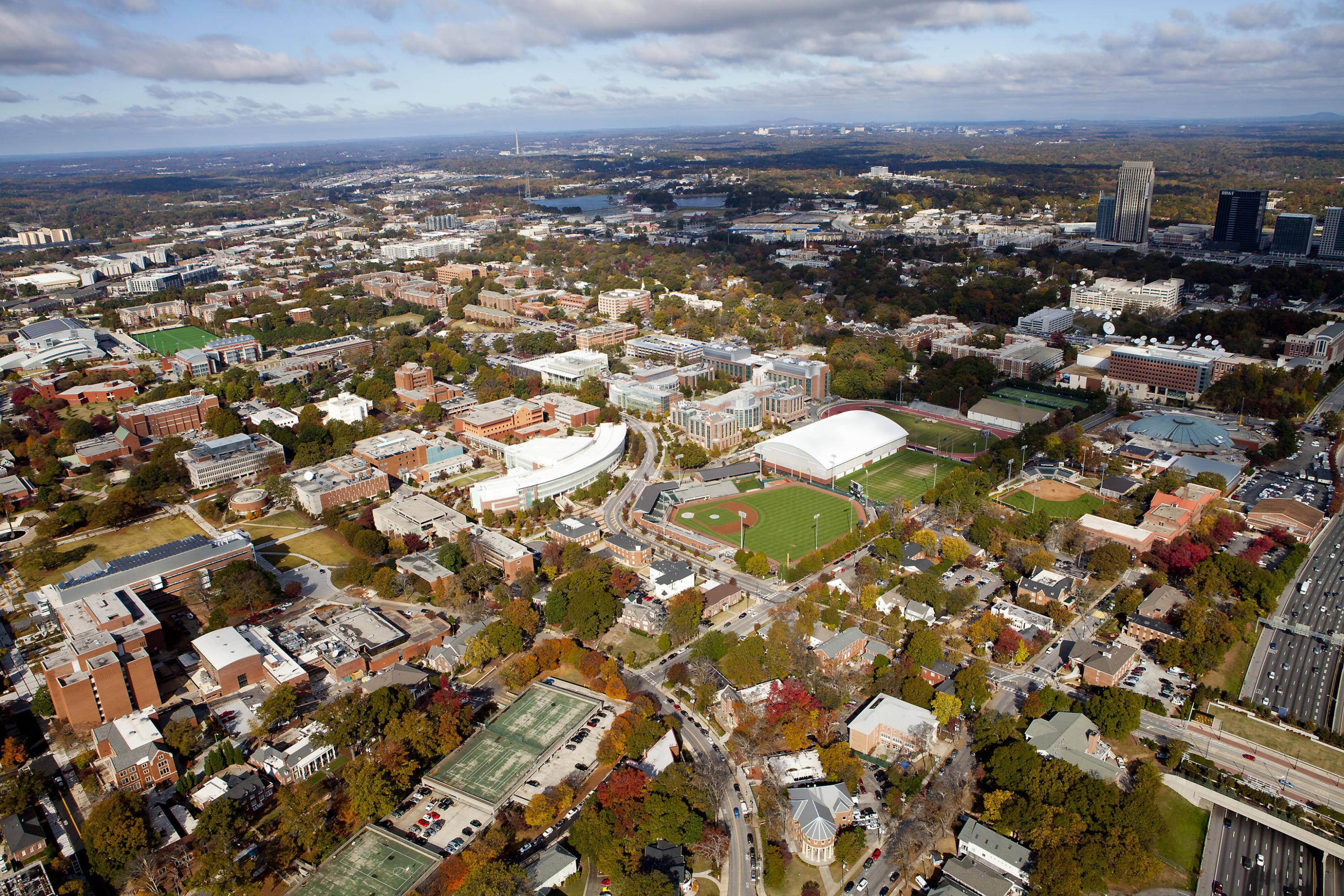
A nostalgic look at Georgia Tech dorm life—from pranks and open-door camaraderie to iconic traditions—paired with a quick tour of campus growth and architecture, from early shacks to Brittain, Van Leer, Tech Green, and today’s modern, collaborative spaces.
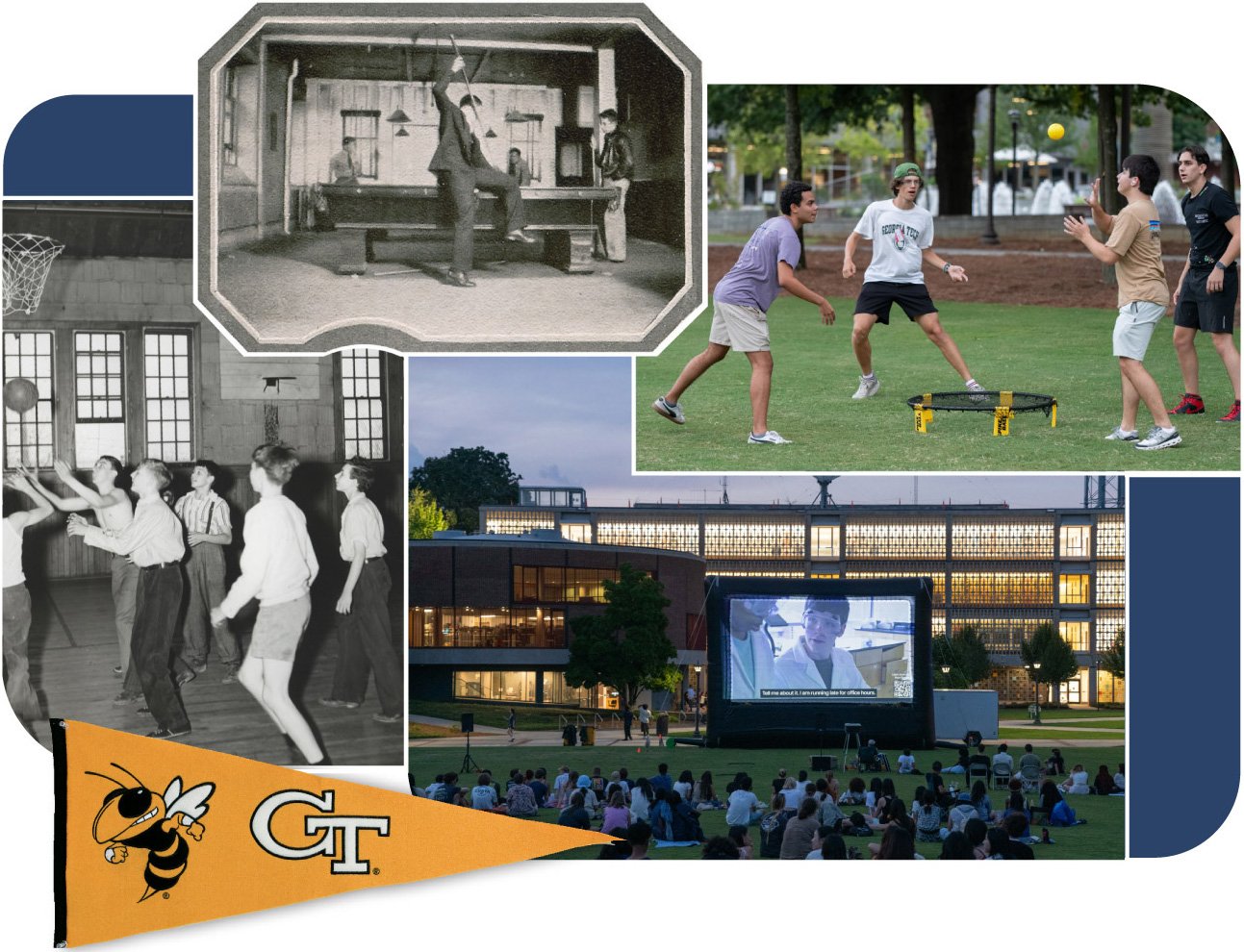
Whether at the YMCA building, Junior’s Grill, or a Greek life dance, students knew how to take advantage of what little free time they had.
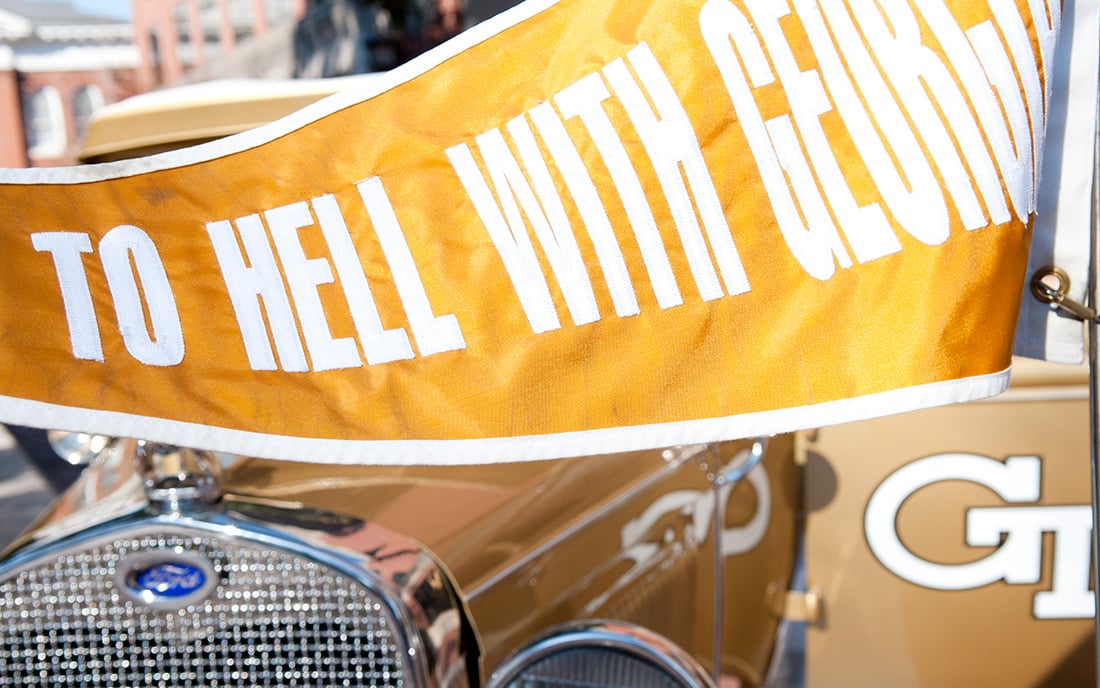
The great intrastate football rivalry between Georgia Tech and "that other school" is also the seed that sprouted several favorite fan traditions.