Georgia Tech Outliers
By: Tony Rehagen | Categories: Alumni Interest

It comes as no surprise that Georgia Tech alumni love numbers. It doesn’t matter whether they studied engineering or design, biomed or math, business or public policy, Yellow Jackets can’t seem to get enough numerical data relating to their alma mater.
The Institute boasts plenty of impressive aggregate numbers when it comes to national and global rankings, retention and graduation rates, economic and research impact, and graduate median salaries. Individual Tech alumni from athletes to astronauts to entrepreneurs can post some imposing stats as well. Then there are the outliers.
In statistics, these data points that differ significantly from other observations, are often indicators of errors in data collection or the structure of the experiment that can skew results. But when it comes to people, outliers represent the best (or at least most interesting) of us. More than mere numbers, these are individuals whose experiences have deviated from the “norm,” giving them special perspective. And when it comes to our Tech outliers, these extraordinary Yellow Jackets and their stories often reflect something special and universal about the school itself.
Here are a few of those stories—along with charts and graphs for the hardcore stat-heads.
You Can Go Home Again and Again and Again
John Woodward, ME 63, has attended 17 Tech Homecomings since 2003, one of the most of any Jacket on record. The feat is more remarkable when one considers that, when Woodward graduated from Tech, he wasn’t sure he’d ever return. “I was glad to get away from Tech,” says Woodward. “I was glad to get away from the grind. Being out in the workforce was much easier than the schoolwork.”
Woodward was born in Vienna (pronounced vye-ANN-uh), Georgia, a tiny town about 150 miles south of Atlanta. The small school gave him a solid but basic education—enough to spark Woodward’s interest in math and science. That and a childhood spent around his parents’ service station drove Woodward to pursue a career in mechanical engineering.
But when the small-town boy arrived at the downtown Atlanta campus in 1959, he immediately felt overmatched by his surroundings, schoolwork, and classmates.
“It was an academic shock,” says Woodward. “These were all new things I’d never been exposed to before. I was thrown in with people who were a lot more sophisticated and better educated.”
 John Woodward, ME 63, and his wife, Mona, at Homecomings over the years.
Woodward simply worked harder. He spent countless hours in the Price Gilbert Memorial Library, poring over his textbooks and notes. He studied while his contemporaries participated in extracurricular activities. He enjoyed Yellow Jacket football and basketball home games, but most of his time was spent in the classroom, the stacks, and his dorm, Howell Hall. As a result, he didn’t make many strong connections on campus. After getting his degree, he took research jobs in Alabama and Southwest Georgia before settling in Albany, Georgia, to work for the Marine Corps as an engineer.
Then in 1978, Woodward suddenly decided to attend his 15-year class reunion. Why? “It’s hard to say,” says Woodward. “It was good to go back to see campus and the football game.”
Woodward and his wife also got involved with Georgia Tech Alumni Travel, which organizes tours for graduates. They journeyed to Europe, the Panama Canal, the Caribbean, and across the U.S. Along the way, Woodward forged stronger bonds with fellow alumni than he had ever made as a student. These new friends, along with Atlanta-based family, became an excuse for the Woodwards to use Homecoming as a mini-vacation from Albany as often as possible. Through 17 Homecomings, Woodward has enjoyed Buzz Bash, the Ramblin Wreck Parade, the Old Gold Reunion, and of course, the football game. Woodward also enjoys seeing how campus has changed around his old dorm and the library. But he no longer thinks of Tech as just a place where he struggled to keep afloat. With more than 60 years of perspective, he can now see the Institute as the small-town boy’s gateway to a broader future.
“I didn’t have much of an idea what I would be doing when I arrived. I gradually learned what my career path could be at Tech. It pointed me to a career that I wouldn’t have had otherwise. And the degree opened many doors.”
Another Birthday That Wasn't
College birthdays are some of the most memorable moments of a student’s life: You’re surrounded by friends who live in the same dorm, house, or just a few minutes away; you have the newfound freedom to celebrate pretty much any way you’d like; and yet you’re not so old as to feel, well, old.
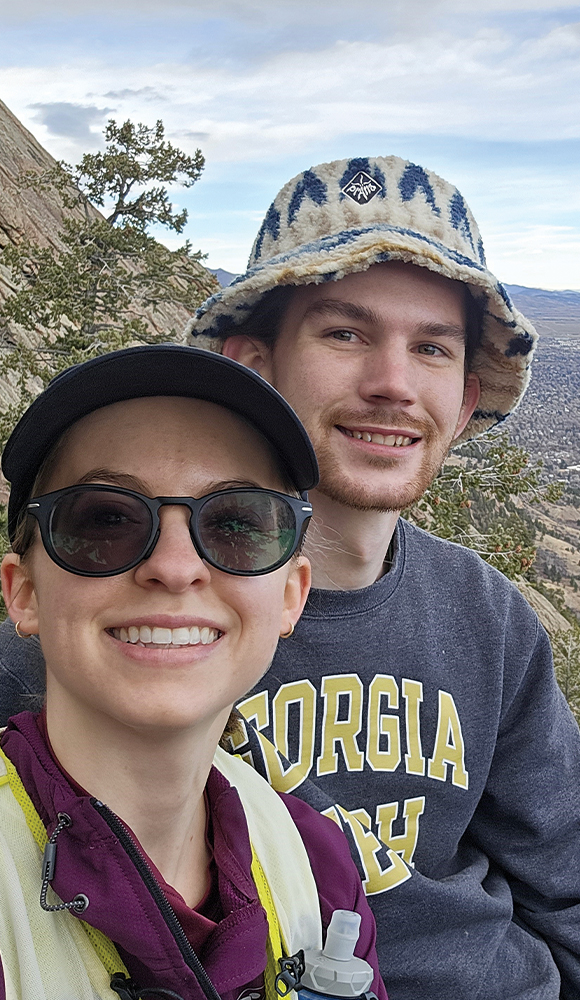
Jules McNeice, BioChem 20, remembers one of her birthdays from her days at Tech. She and some teammates from the Yellow Jacket Fencing Club stayed up late watching movies the night before. They kept an eye on the clock, waiting for midnight. The moment 11:59 p.m. turned to 12:00 a.m., they all jumped and yelled … and then, in less than a second it was over. “It was like New Year’s Eve,” says McNeice. “You watched the clock roll over and it’s a celebration that just lasts a second.”
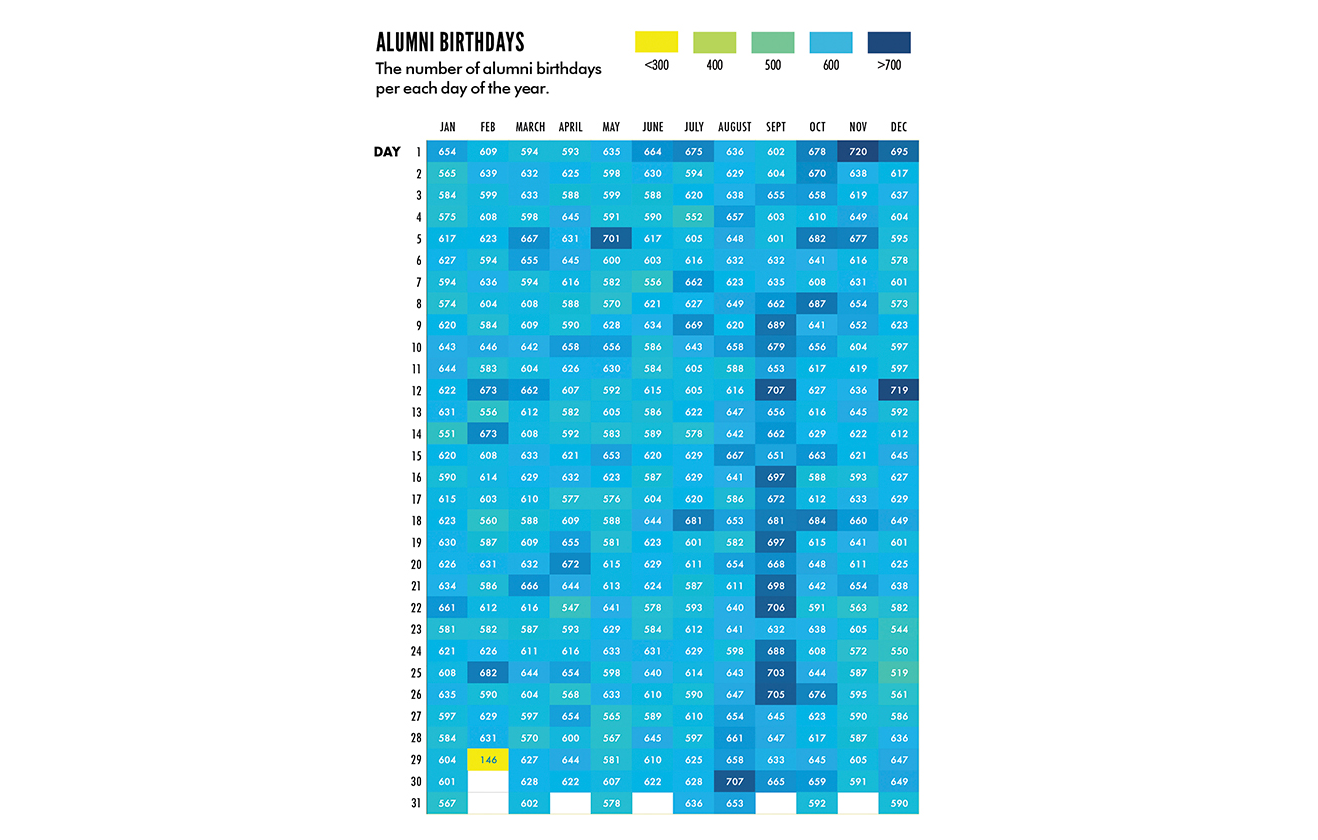
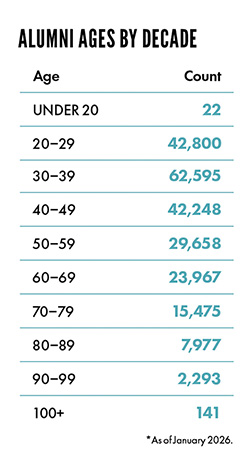 The brief celebrations were because it usually wasn’t actually McNeice’s birthday. In fact, technically she didn’t have a birthday most years. She is one of only 146 Tech alumni out of 227,176 living alumni (0.064%) who share a Leap Day birthday. She was born on Feb. 29, a date that only occurs once every four years to help keep the 12-month calendar more or less matched up with the Earth’s orbit around the Sun. “It’s always a fun fact I can use when introducing myself,” says McNeice. “As soon as someone finds out, they joke that I’m only 6 years old when I’m actually 26. It wasn’t fun when I was in elementary school and kids teased that I was only technically 2.”
As her bedtime got later with age, McNeice started the tradition of staying up on Feb. 28 until midnight and celebrating the millisecond in which she imagined her real birthday zoomed past before March set in. Friends had fun teasing her whether hers was a February b-day or March. She eventually resolved to just celebrate both days. And of course, when Feb. 29 did finally arrive every four years, McNeice had a good reason to make it a blow-out event.
A native of Marietta, Georgia, McNeice followed a love of science to Tech, where she studied biochemistry, first on a pre-med track before veering toward a goal of going into pharmacology. But as busy studying as she was, she never missed her birthday, no matter how fleeting it seemed. The year McNeice turned 21, she had hoped to have her first legal sip of alcohol right after midnight, but Feb. 28 fell on a Sunday that year, and no bars were open that late. “My friends made up for that the following weekend,” she says.
McNeice had one “real” birthday during her time at Tech: Feb. 29, 2020—just as the emergence of Covid-19 had essentially shut the world down. “Unlucky,” she says. But overall, she doesn’t mind having a Leap Day birthday. Even when she has to unravel a slightly complicated response to the simple question: How old are you?
The Lone Mosotho Yellow Jacket
Georgia Tech is truly an international campus. For decades, students from all over have come to Atlanta to study at the world-renowned technical institute. But in recent years, the school has developed its online curriculum, putting its coveted degrees within the grasp of anyone with an internet connection and greatly expanding Tech’s reach into even the smallest and most remote countries. In the process, they’ve created Yellow Jackets in every corner of the globe.
While the vast majority of alumni, 89.95%, live in the U.S., there are now Yellow Jackets scattered across 160 countries. And more than 20 Ramblin’ Wrecks, like Tsoloane Lehloba, are the only alumni representing Tech in their entire country.
Lehloba, MS CS 25, was born and raised in the Kingdom of Lesotho, a small country of around 2.3 million people (known collectively as Basotho, and individually as Mosotho) perched in the Maloti Mountains in southern Africa. Its lowest point is 1,400 meters above sea level; it is the only independent state in the world that is entirely above 1,000 meters. It is also completely surrounded by the country of South Africa. “Because we are a country inside a bigger country,” says Lehloba, “most people don’t know about us.”
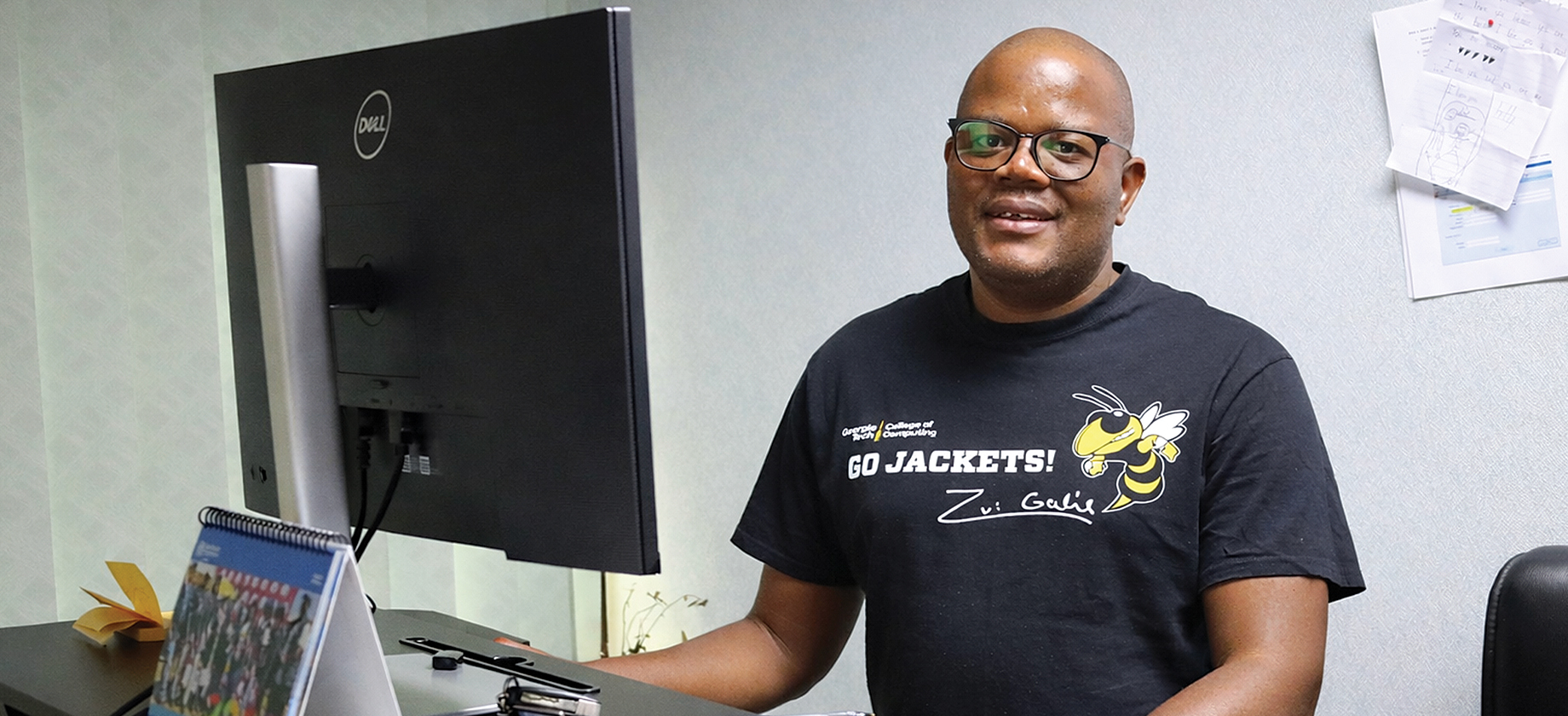
In turn, Lehloba didn’t know much about Tech, at least not at first. He worked in information and communication technology and had gotten his bachelor’s degree in physics and computer science from the National University of Lesotho. He had a job with the World Health Organization (WHO), but looking to advance, most of the higher positions with WHO and the United Nations required a master’s degree, which wasn’t available in his home country. Not wanting to uproot to a university in South Africa, Lehloba began searching for online solutions that would allow him to stay and work in his homeland.
This was 2019. At the time, Georgia Tech was one of the few schools offering an online master’s in computer science (OMCS). And unlike some of the other schools that did offer OMCS, Tech’s program was course-based and not built around independent research. He enrolled and started viewing recorded lectures, visiting the instructor during Zoom office hours (usually in the middle of the night for Lesotho, which is seven hours ahead of Atlanta), and WhatsApp group discussions with his classmates, which were in themselves examples of the school’s worldwide influence. “For each discussion, we had students from Atlanta, Nigeria, the Netherlands, London, Germany, Singapore, the Middle East, and Japan,” says Lehloba. “So, it was almost all over the globe.”
Lehloba was also more than just a nominal Tech student. He followed the school via social media, subscribing to email lists to get updates of the goings on in Georgia.
He had hoped to finally come to campus to walk for his graduation and accept his physical diploma, but he was unable to make the trip. Still, he considers himself a Yellow Jacket—even if the closest he’s ever come to Atlanta was a quick trip to Baltimore and back for a weeklong workshop.
“Eventually I’ll visit Atlanta,” he says. “Even if it’s just as a tourist.”

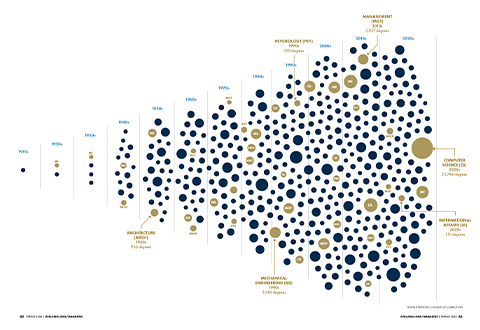
Courtesy of Joshua Preston, College of Computing