What Georgia Tech's "History of Chairs" Teaches About Reinvention
By: Jennifer Herseim, Photos by Sam Gay | Categories: Featured Stories
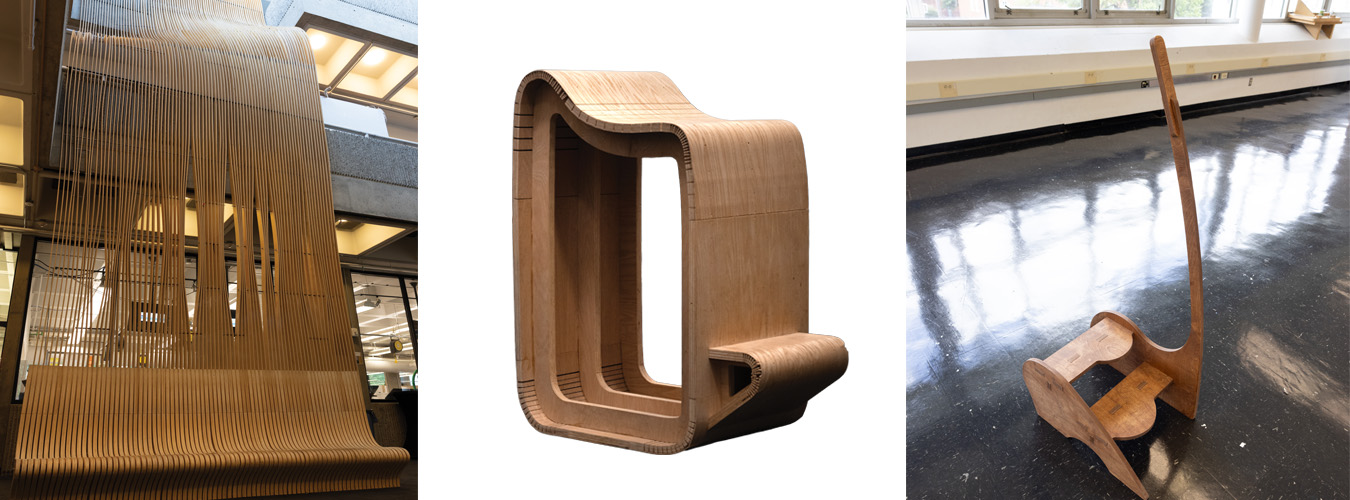
Each year, more than 1,000 students take The History of Industrial Design, Joyce Medina’s popular course that’s better known as “The History of Chairs.” Tynan Purdy, ID 23, took the course during his first semester at Tech.
“It’s the history of design from the last 150 years told through the story of lots of objects and artistic movements, and, for whatever reason, a great many of those objects are chairs,” he remembers.
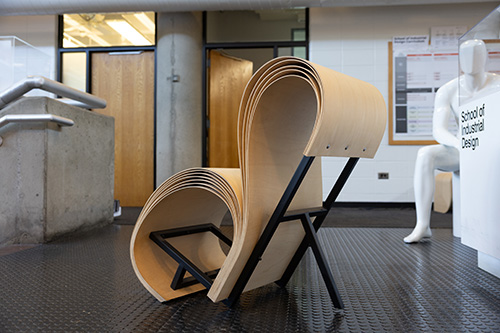
Why So Many Chairs in Tech's Industrial Design Course?
You could use refrigerators, telephones, or locomotives to illustrate how industrial design has evolved over the decades, says Medina, who’s taught the course since 1997. “But it’s much easier to see those differences side by side with chairs.” It helps that second-year industrial design students design and build their own chairs as part of a studio course.
Shortly after Medina began teaching the class, a student coined the nickname “The History of Chairs,” and she embraced it.
A Revolutionary 1850s-era Chair
Designers are essentially inventors and reinventors, Medina says. Industrial design is full of examples of bold pivots. The chair that might best embody reinvention is the first example that students learn in her course: Michael Thonet and Gebrüder Thonet’s 1850s-era chair.
In 1851, the Thonet Brothers won recognition at the Great Exhibition at London’s Crystal Palace for their chair that was built with a novel manufacturing process. Not only was their early assembly line process revolutionary, Medina explains, but the product itself offered something many chairs of that time lacked: comfort.
“In that period of Victorian England, everything was so ornate and they used the cheapest wood they could and painted or gilded it to disguise it. They were terribly uncomfortable chairs,” Medina says. The Thonet brothers rethought both production and comfort.
Designers Look To Reinvent With New Materials & Technology
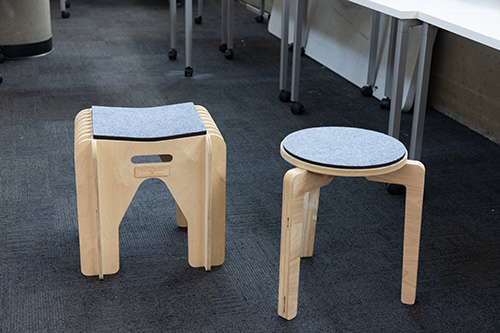
Designers look at new materials and emerging technology, and often ask, “What can I do with this?”
New materials like mushroom mycelium, a fibrous fungal material, could be used to create sustainable, customizable furniture, Medina says. Pivots can also happen when new technology emerges.
For example, “The History of Chairs” is no longer taught in the East Architecture auditorium. “You no longer have to squint to see tiny images on a projector,” Medina says. Today, the course is online. But one thing hasn’t changed: There are still a lot of chairs.
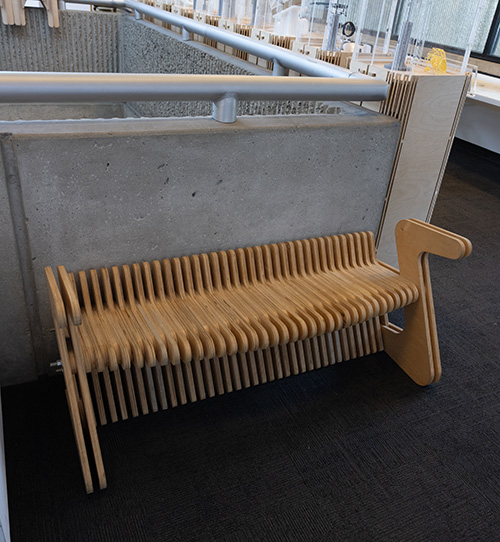
Vote for Your Favorite Campus Chair
Was it the seat next to Einstein’s statue or the Rapunzel bench inside the College of Design? Vote for your favorite!